
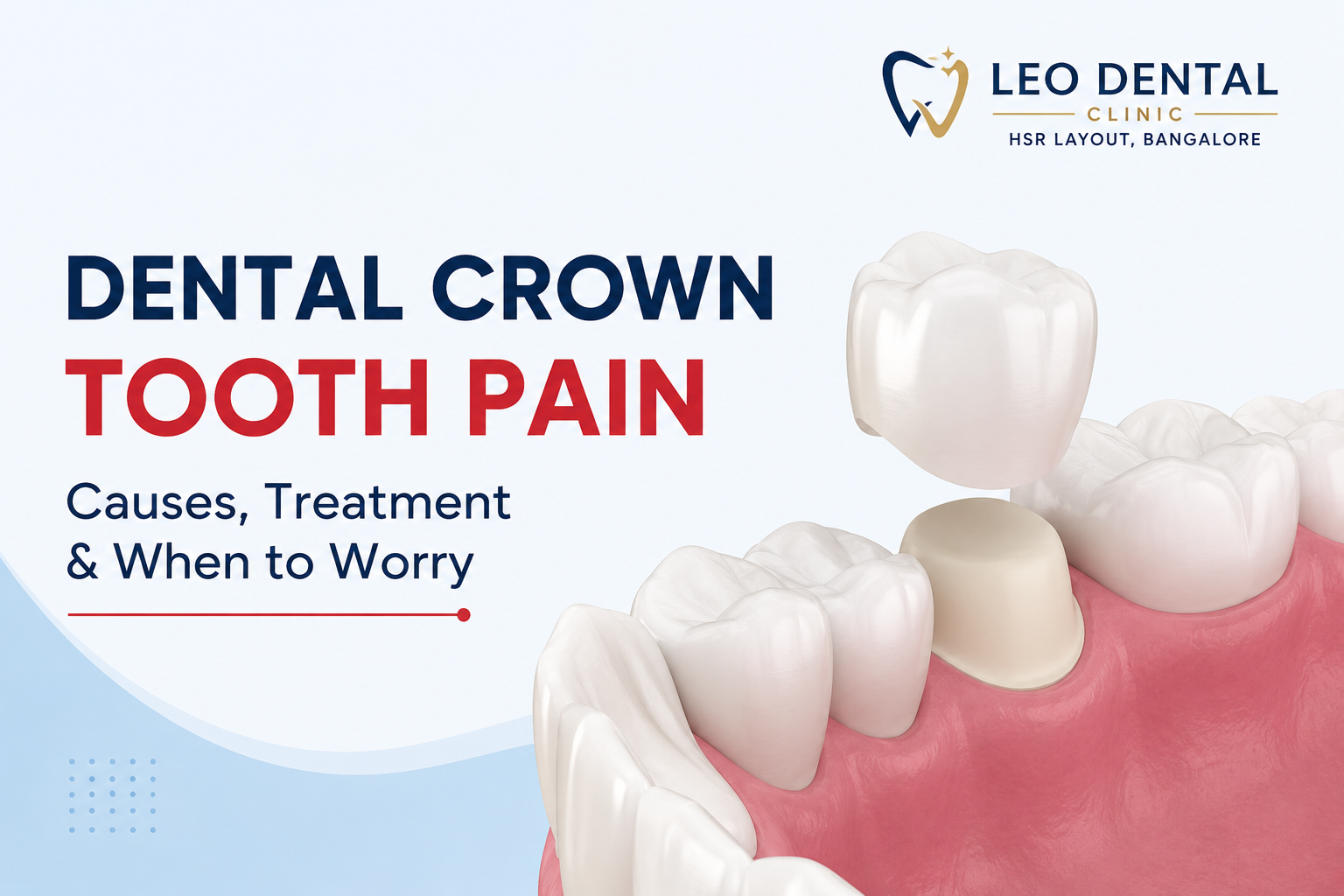
Dental Crown Tooth Pain: Causes, Treatment & When to Worry
Why does my tooth hurt after a temporary dental crown? Mild sensitivity or soreness after a temporary crown can be normal, especially during the first few days. However, severe, persistent, or worsening pain may indicate an underlying dental problem that requires professional attention.
At Leo Dental Clinic, HSR Layout, Bangalore, our dental team helps patients understand the cause of tooth pain after a temporary crown and recommends treatment based on their individual dental condition.
What Is a Temporary Dental Crown?
A dental crown is a protective restoration placed over a damaged, weakened, or heavily decayed tooth. Before the permanent crown is ready, a temporary dental crown is usually placed to protect the prepared tooth.
A temporary crown helps:
Protect the tooth from sensitivity and bacteria
Maintain the position of surrounding teeth
Restore basic chewing function
Protect the prepared tooth until the permanent crown is placed
Because temporary crowns are designed for short-term use and are attached with temporary cement, they may sometimes feel different from a permanent crown.
Is Tooth Pain Normal After a Temporary Crown?
Some sensitivity after crown treatment can be normal. Preparing the tooth involves removing damaged tooth structure and shaping it for the crown, which can temporarily irritate the tooth.
You may experience mild:
Sensitivity to hot or cold
Dull aching
Gum soreness
Discomfort while chewing
For many patients, these symptoms gradually improve within a few days.
However, persistent tooth pain after a temporary crown, severe pain, swelling, or pain that becomes worse should be evaluated by a dentist.
Common Causes of Dental Crown Tooth Pain
1. Normal Tooth Sensitivity
After tooth preparation, the remaining tooth structure may be more sensitive to temperature. Mild sensitivity to cold, hot, or sweet foods can occur and may gradually settle as the tooth adjusts.
2. High or Uneven Bite
One of the common causes of pain when biting after a temporary crown is an uneven bite.
If the temporary crown is slightly higher than the surrounding teeth, it may receive excessive pressure whenever you bite or chew. Your dentist can check the bite and make a small adjustment if required.
3. Gum Irritation
The gum surrounding the prepared tooth may feel tender after treatment. Mild irritation generally improves with proper oral hygiene and time. Persistent swelling or significant gum pain should be checked by a dentist.
4. Loose or Poorly Fitting Temporary Crown
Temporary crowns can sometimes become loose because they are attached with temporary cement. A loose crown can cause sensitivity, discomfort, or allow bacteria to reach the prepared tooth.
If your temporary crown feels loose or has fallen out, contact your dentist rather than trying to fix it with household glue.
5. Existing Decay or Infection
If the tooth had deep decay or an infection before crown treatment, the underlying problem may continue to cause pain. A dental crown protects the tooth but does not automatically eliminate an untreated infection.
6. Inflamed Dental Pulp
The dental pulp contains the nerves and blood vessels inside the tooth. Extensive decay, trauma, or dental treatment can sometimes cause inflammation of the pulp.
Persistent, spontaneous, throbbing, or severe pain may require further evaluation. In some cases, **root canal treatment** may be recommended.
Importantly, not every tooth that hurts after a temporary crown needs a root canal. The cause must be determined through a proper dental examination.
Why Does My Temporary Crown Hurt When I Bite?
If your temporary crown hurts when you bite, the first thing your dentist may check is the bite.
A crown that is slightly too high can contact the opposing tooth before the rest of the teeth come together. This can create excessive pressure and soreness.
A simple bite adjustment may resolve the problem. If pain continues after adjustment, your dentist may investigate other causes such as pulp inflammation, infection, or a cracked tooth.
How Long Does Temporary Crown Pain Last?
Every patient is different, but mild sensitivity or soreness often starts improving within a few days.
The healing period can depend on:
The amount of tooth preparation
The depth of previous decay
The condition of the dental pulp
Previous dental treatment
The fit and bite of the temporary crown
If pain is gradually improving, it may simply be part of the adjustment process. However, pain that becomes stronger, continues for an extended period, or is associated with swelling should be assessed by a dentist.
When Should You See a Dentist?
Contact your dental clinic if you experience:
Severe or increasing tooth pain
Constant or spontaneous pain
Significant pain while biting
Facial or gum swelling
Fever
Pain that wakes you at night
Prolonged hot or cold sensitivity
A loose, broken, or fallen temporary crown
Bad taste or smell around the tooth
These symptoms do not automatically mean your treatment has failed, but they do require professional evaluation.
Treatment for Tooth Pain After a Temporary Crown
Treatment depends on the cause of the pain. Your dentist may examine the crown, check your bite, assess the gums, and take an X-ray when appropriate.
Treatment may include:
Bite adjustment if the crown is too high
Re-cementing or replacing a loose temporary crown
Managing sensitivity with appropriate dental care
Treating gum irritation
Treating underlying decay or infection
Root canal treatment when significant pulp damage or infection is present
Your dentist will recommend the appropriate treatment after evaluating the tooth.
How to Care for a Temporary Dental Crown
Until your permanent crown is placed:
Brush gently around the crown
Maintain good oral hygiene
Avoid very hard or sticky foods
Chew carefully and avoid excessive pressure on the temporary crown
Follow your dentist’s instructions
Attend your scheduled permanent crown appointment
Taking care of the temporary crown can help reduce the risk of loosening or damage.
Meet the Doctors at Leo Dental Clinic, HSR Layout
At Leo Dental Clinic, HSR Layout, patients receive personalised dental care from experienced professionals.
Dr. Feroz Khan, MDS Orthodontics & Dentofacial Orthopedics, has 15 years of clinical experience, with 2500+ Invisalign cases and 1,500+ orthodontic cases. He specialises in advanced orthodontic care and treatment planning.
Dr. Lahari, MDS Gold Medalist, has 15 years of clinical experience and specialises in painless dental treatments, pediatric dentistry, and root canal care. Her patient-focused approach helps patients feel comfortable and informed throughout their treatment.
Why Choose Leo Dental Clinic in HSR Layout?
If you are searching for the best dental clinic in HSR Layout or a reliable dentist in HSR Layout Bangalore, choosing a clinic with experienced professionals and personalised treatment planning is important.
At Leo Dental Clinic, HSR Layout, Bangalore, patients can access comprehensive dental care, including:
Dental crowns
Root canal treatment
Dental implants
Braces and orthodontic treatment
Invisalign
Pediatric dentistry
Preventive dental care
Our focus is on understanding each patient’s dental needs and providing appropriate, comfortable treatment.
Frequently Asked Questions
Is tooth pain normal after a temporary crown?
Mild sensitivity or soreness for a few days can occur after tooth preparation. Severe, persistent, or worsening pain should be evaluated by a dentist.
Why does my temporary crown hurt when I bite?
A high or uneven crown can place extra pressure on the tooth. A dentist can check and adjust the bite if necessary.
Does pain under a temporary crown mean I need a root canal?
Not necessarily. Pain can result from sensitivity, bite problems, gum irritation, or a loose crown. Root canal treatment is considered only when the dental pulp is significantly inflamed or infected.
What should I do if my temporary crown falls out?
Contact your dentist promptly, keep the crown safe, and avoid chewing on that side. Do not use household glue to reattach it.
Conclusion
Mild tooth pain after a temporary crown can sometimes be part of the normal adjustment process. However, severe, persistent, or worsening pain should not be ignored.
If you are experiencing dental crown tooth pain or searching for a dental clinic in HSR Layout, the team at Leo Dental Clinic, HSR Layout, Bangalore can evaluate your symptoms and help determine the appropriate treatment.
Book a consultation with Leo Dental Clinic to understand the cause of your crown pain and get personalised dental care.