
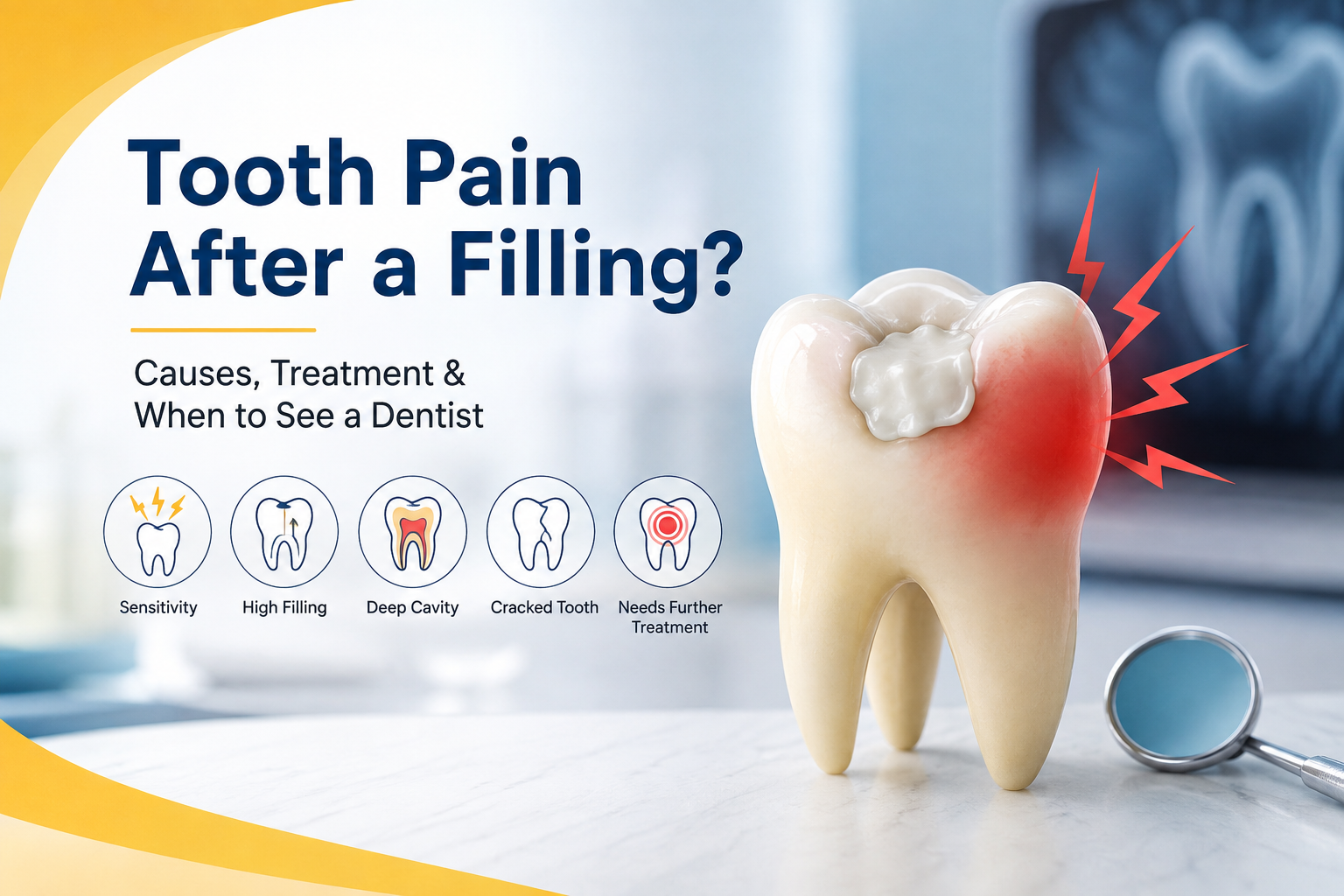
Getting a dental filling is one of the most common ways to treat a cavity and restore a damaged tooth. However, some people notice sensitivity or discomfort after the procedure and may wonder, “Why does my tooth hurt after a filling?”
A little sensitivity after a dental filling can be temporary. However, the type, intensity and duration of the pain can provide clues about what may be happening. Mild sensitivity may settle as the tooth adjusts, while persistent or severe pain may require a dentist to check the tooth and the filling.
If you are experiencing tooth pain after filling, understanding the possible causes can help you decide when it is reasonable to monitor the symptoms and when you should schedule a dental appointment.
Is Tooth Pain After a Filling Normal?
Some sensitivity after a filling can happen, particularly when eating or drinking something hot, cold or sweet. Minor sensitivity and soreness around the treated area may temporarily occur after a filling and often improves within a week or two.
However, not every type of pain should simply be ignored.
For example, pain that occurs specifically when you bite down may have a different cause from brief sensitivity to cold water. Similarly, intense pain that continues after exposure to hot or cold may indicate that the tooth’s inner tissues are significantly irritated or damaged.
The important point is that tooth pain after a dental filling has several possible causes, so the symptoms need to be considered in context.
5 Common Reasons Your Tooth Hurts After a Filling
1. Temporary Tooth Sensitivity
The tooth may be temporarily sensitive after treatment. This can happen because the tooth has recently undergone a dental procedure.
You may notice a short, sharp sensation when drinking cold water, eating ice cream or consuming hot beverages. In many cases, this type of sensitivity gradually becomes less noticeable.
If the sensitivity is improving over time, it may not indicate a serious problem. However, if it becomes stronger or continues without improvement, a dental examination is recommended.
2. The Filling May Be Slightly High
One common reason for pain after a dental filling when biting is that the new filling may interfere with the way your upper and lower teeth come together.
You may feel that the treated tooth touches first when you bite or chew. Sometimes the tooth can feel uncomfortable every time you put pressure on it.
A dentist can examine your bite and, if necessary, adjust the filling so that your teeth come together properly.
This is one reason why pain specifically associated with biting should not automatically be treated as ordinary sensitivity.
3. The Cavity Was Deep
If the original cavity was close to the pulp—the living tissue inside the tooth—the tooth may be more irritated after the decay is removed and the filling is placed.
A deeper cavity can sometimes cause inflammation inside the tooth. Depending on the severity and how the tooth responds, additional treatment may be required.
This does not mean every deep cavity will need a root canal. A dentist needs to evaluate the tooth and determine the condition of the pulp before recommending further treatment.
4. An Existing Crack or Tooth Problem
Sometimes the filling is not the actual cause of the pain. A tooth may already have a crack or another underlying problem that becomes noticeable around the time of treatment.
Cracked teeth can cause sharp pain when biting and may also produce sensitivity to temperature.
If your tooth continues to hurt despite the filling, your dentist may check for cracks, recurrent decay, gum problems or other causes.
5. The Tooth May Need Further Treatment
If a tooth has severe or persistent pain, especially pain that lingers after exposure to hot or cold, the nerve inside the tooth may be significantly inflamed or damaged.
In some cases, this can mean that the tooth requires root canal treatment. Root canal treatment is used to remove infected or inflamed pulp, clean the inside of the tooth and seal it to help preserve the natural tooth.
A dentist should make this decision after examining the tooth rather than based on symptoms alone.
How Long Should Tooth Sensitivity Last After a Filling?
There is no single recovery time that applies to every patient. The type of filling, depth of the cavity and condition of the tooth can all influence how it feels afterward.
According to Cleveland Clinic, minor sensitivity and gum soreness after a filling may be temporary and can settle within a week or two.
What matters is the overall pattern.
If your sensitivity is gradually improving, that is generally more reassuring than pain that is becoming stronger. If the pain remains intense, worsens, affects your ability to chew or does not seem to be settling, contact your dentist for an evaluation.
What Can You Do If Your Tooth Hurts After a Filling?
While waiting for a dental evaluation, you can avoid foods and drinks that clearly trigger the sensitivity, particularly very hot or cold items.
Continue maintaining good oral hygiene, including brushing and cleaning between your teeth. Avoid chewing hard foods directly on a painful tooth until you know what is causing the discomfort.
It is also important not to repeatedly test the tooth with extremely cold or hot foods. Doing so may only make the symptoms more uncomfortable.
If you are considering pain medication, follow the advice of your dentist or healthcare professional and the instructions on the medication label.
When Should You See a Dentist?
You should arrange a dental examination if the pain is severe, persistent or getting worse.
You should also seek prompt dental care if you develop symptoms such as:
Severe toothache that does not settle
Pain that significantly affects chewing
Prolonged sensitivity to hot or cold
Facial or jaw swelling
Fever or chills
A broken or damaged filling
Pain that continues instead of improving
Severe tooth pain accompanied by fever or swelling can indicate an infection and should not be ignored.
If you are unsure whether your symptoms are normal after a filling, getting the tooth checked is safer than trying to diagnose the cause yourself.
Can Tooth Pain After a Filling Be Prevented?
Not every case of post-filling sensitivity can be prevented, but maintaining good oral hygiene and addressing cavities early can reduce the risk of more extensive tooth damage.
Regular dental examinations can help identify cavities and other dental problems before they become more advanced. Brushing twice a day with fluoride toothpaste and cleaning between your teeth daily are also important parts of maintaining oral health.
If you already have a filling, regular dental check-ups can also help your dentist monitor the condition of the restoration and the surrounding tooth.
Dental Filling Treatment in HSR Layout
If you are experiencing tooth pain after filling or have a cavity that needs treatment, an examination can help determine the actual cause of your symptoms.
At Leo Dental Clinic in HSR Layout, patients can discuss concerns related to dental fillings, tooth sensitivity, cavities and other dental problems with experienced dental professionals. The clinic also provides treatments such as [Root Canal Treatment], [Dental Crowns & Bridges], and [Teeth Cleaning & Gum Treatment], depending on the patient’s dental needs.
For patients looking for a dental clinic in HSR Layout, a professional evaluation is an important first step before deciding on any treatment.
Frequently Asked Questions
1. Is it normal for a tooth to hurt after a filling?
Some mild sensitivity or soreness can be temporary after a filling. However, severe, persistent or worsening pain should be evaluated by a dentist.
2. Why does my filling hurt when I bite?
Pain when biting may occur if the new filling interferes with your bite. Your dentist can check the bite and determine whether the filling needs adjustment.
3. How long does sensitivity last after a dental filling?
Minor sensitivity may improve within a week or two, although recovery varies depending on the tooth and the treatment. If symptoms are not improving, contact your dentist.
4. Can a filling cause the need for a root canal?
A filling itself does not automatically mean you need a root canal. However, if the original decay was deep and the pulp becomes significantly inflamed or infected, root canal treatment may be required.
5. When should I worry about pain after a filling?
Seek dental advice if you have severe or persistent pain, significant swelling, fever, or pain that is getting worse instead of improving.
Final Thoughts
A little sensitivity after a dental filling does not necessarily mean something is wrong. However, persistent pain, pain while biting, prolonged hot or cold sensitivity or swelling can indicate that the tooth needs further evaluation.
Rather than guessing the cause, a dental examination can help identify whether the discomfort is temporary sensitivity, a bite issue, a deeper cavity or another dental problem.
If you are experiencing tooth pain after a filling and are looking for dental care in HSR Layout, consider speaking with a qualified dental professional to understand the cause and appropriate treatment options.